CREATIVE LABS GCD-RS40B Cd Drive Ide Quad
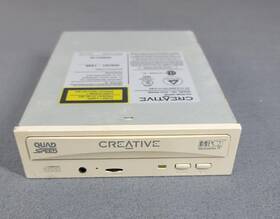
( Brand: Creative Labs ), ( Manufacturer Part Number: GCD-RS40B ), ( Compatible Brand: Universal ), ( Type: Cd Rom Drive ), ( Year Manufactured: 1995 ), ( Country Of Origin: Japan )
Review CREATIVE LABS Computer Cd rom Drive Inc Ide Quad Speed Vintage
The **Creative Labs GCD-RS40B CD-ROM Drive (1995, IDE Quad)** stands as a relic of early multimedia computing, embodying the technological leap that transformed personal computers from text-based workstations into vibrant hubs of digital entertainment and productivity. Introduced in the mid-1990s, this drive was a cornerstone of the burgeoning CD-ROM revolution, offering a blend of speed, reliability, and versatility that catered to both home users and professionals. Designed with the **IDE (Integrated Drive Electronics) Quad interface**, the GCD-RS40B was engineered to connect seamlessly to the burgeoning IDE-based motherboards of the era, allowing for efficient data transfer rates of up to **12x speed** a significant upgrade from the slower SCSI or earlier IDE drives. Its sleek, compact form factor, typically housed in a 5.25-inch bay, made it an ideal fit for desktops of the time, while its robust construction ensured durability for the high-volume data access demands of games, multimedia applications, and early digital libraries.
At the heart of the GCD-RS40B lies **Creative Labs proprietary technology**, which not only delivered superior read performance but also introduced features that were cutting-edge for its time. The drive was optimized for **CD-DA (audio), CD-ROM (data), and CD-ROM XA (extended audio)** formats, making it a versatile tool for playing back high-quality audio CDs, installing software, and accessing early interactive multimedia experiences like CD-ROM encyclopedias, educational titles, and demo discs. Its **buffered data cache** and **low seek time** ensured smooth operation, reducing the frustration of slow loading times that plagued earlier CD-ROM drives. Additionally, the GCD-RS40B was compatible with a wide range of operating systems, including **Windows 3.1, Windows 95, DOS, and early versions of Linux**, making it a universally adaptable peripheral for the diverse computing landscape of the mid-'90s.
Beyond its technical specifications, the GCD-RS40B holds a nostalgic appeal for enthusiasts and collectors, representing a pivotal moment in the evolution of digital media. Its presence in a system was often a status symbol, signaling that the user was equipped for the multimedia future. The drive s **golden-era design** with its distinctive label, robust metal casing, and reliable mechanical components reflects the engineering prowess of an era before the dominance of optical drives like DVDs and Blu-rays. For modern collectors and retro computing aficionados, the GCD-RS40B isn t just a piece of hardware; it s a tangible link to the golden age of CD-ROM gaming, where titles like *Myst*, *SimCity 2000*, and *The Legend of Zelda: A Link to the Past* became defining experiences of personal computing. Whether used in a restored vintage system or as a centerpiece in a multimedia setup, the GCD-RS40B remains a testament to Creative Labs innovation and the transformative power of CD-ROM technology.
The **Creative Labs GCD-RS40B CD-ROM Drive (1995, IDE, Quad Speed)** is a vintage optical drive from the mid-1990s. Below is a detailed breakdown of its pros and cons, followed by a conclusion and recommendation.
---
### **Pros:** 1. **Compatibility with Older Systems:**The GCD-RS40B is an IDE-based drive, meaning it connects directly to the motherboard s IDE controller (often shared with a hard drive). This makes it easy to install in older PCs from the late 1990s or early 2000s, particularly those running Windows 95/98, Windows XP, or early Linux distributions. It avoids the complexity of SCSI or later ATA/133 interfaces.
2. **Quad-Speed (4x) Read Speed:**While modern drives offer speeds of 50x or higher, the GCD-RS40B s 4x speed (400 KB/s) was cutting-edge in 1995. For its time, this was fast enough for CD audio playback, basic software installation, and early multimedia applications. It can still read standard CD-ROMs, CD-Rs, and CD-RWs (though write speeds are slow).
3. **Reliability for Basic Use:**Many vintage IDE drives from this era are mechanically robust and can last decades if not subjected to extreme conditions. The GCD-RS40B is no exception, provided it is handled gently and not exposed to dust or moisture. It lacks moving parts that would wear out quickly (unlike floppy drives).
4. **Low Power Consumption:**Compared to modern drives, this unit draws minimal power, making it suitable for older systems with limited PSU capacity. It doesn t require advanced cooling or high-wattage connections.
5. **Historical and Collectible Value:**For enthusiasts of retro computing, this drive holds nostalgic value. It represents a transitional period in storage technology, bridging the gap between floppy disks and faster CD-ROMs. Some collectors may appreciate its inclusion in a vintage PC setup.
6. **Affordability:**Due to its age, the GCD-RS40B is often inexpensive, especially if purchased used. This makes it a low-risk option for those looking to restore or expand an old system without significant cost.
7. **CD-R/CD-RW Support:**Unlike some older CD-ROM drives, the GCD-RS40B supports writable media (CD-R and CD-RW), allowing users to create backups or burn audio CDs. While the write speed is slow (compared to modern standards), it functions for basic purposes.
8. **Simple Installation:**IDE drives are plug-and-play in most cases, requiring only a power cable and data cable. No drivers are needed for basic CD-ROM functionality in older operating systems.
---
### **Cons:** 1. **Slow Read Speed:**A 4x drive is painfully slow by today s standards. Loading games, software, or even large files can take minutes, which is impractical for modern use. Even for vintage software, the wait time can be frustrating.
2. **Limited Compatibility with Modern Systems:**The GCD-RS40B is not designed for modern operating systems (Windows 10/11, macOS, or Linux distributions with newer kernels). While it may work in a virtual machine or a very old OS, it won t integrate seamlessly with contemporary software or hardware. Most modern BIOS/UEFI systems may not even recognize it as a bootable device.
3. **No DVD Support:**The drive only reads CDs, not DVDs or Blu-rays. This limits its usefulness for modern media, which has largely shifted to DVDs and digital formats.
4. **Mechanical Wear:**Like all optical drives, the GCD-RS40B has a laser and moving parts that can degrade over time. Dust, scratches on discs, or misaligned optics can cause read errors. While it may still function, the reliability decreases compared to newer drives.
5. **No USB or FireWire Connectivity:**The drive lacks modern interfaces like USB or FireWire, making it difficult to connect to newer systems without additional adapters (which may not be straightforward or reliable).
6. **Limited Software Support:**Modern operating systems often lack native support for older IDE drives, especially in terms of driver updates or compatibility with newer file systems. Some older OSes may not even recognize the drive properly.
7. **Power Supply Requirements:**While low-power by modern standards, the GCD-RS40B may not be compatible with very old or underpowered systems (e.g., some early 1990s PCs with minimal PSUs). It requires a standard IDE power connector, which is widely available but may need verification.
8. **No Error Correction for Modern Media:**The drive lacks advanced error correction or buffering that modern drives use to handle damaged discs or high-speed data transfers. This can lead to more frequent read errors with scratched or low-quality media.
9. **No SATA or Advanced IDE Modes:**The GCD-RS40B uses PIO mode (Programmed Input/Output), which is slower than modern ATA/ATAPI modes (like DMA or Ultra DMA). This further reduces its performance compared to newer drives.
10. **Obsolescence:** The drive is functionally obsolete for most practical purposes. Its primary use cases are limited to:- Running very old software in a vintage PC setup.
- Collecting or displaying retro technology.
- Creating backups of legacy data (though this is inefficient compared to modern solutions).
---
### **Conclusion:**The **Creative Labs GCD-RS40B** is a fascinating piece of computing history, but its practical utility today is severely limited. It excels as a **collectible or nostalgic component** for enthusiasts who enjoy restoring or preserving vintage hardware. For those with older systems running Windows 95/98 or early Linux, it may serve a limited purpose for reading CDs, but its slow speed makes it impractical for serious use.
If your goal is to **run modern software, play modern games, or handle contemporary data**, this drive is not suitable. However, if you are **building a retro gaming rig, a historical display system, or a minimalist setup for legacy software**, the GCD-RS40B could be a charming addition provided you accept its limitations.
---
### **Recommendation:** - **Buy it if:**- You are a collector or enthusiast interested in vintage computing.
- You have an old PC (e.g., a Pentium II/III system) and want to add a functional CD-ROM drive for running 1990s software.
- You enjoy the challenge of working with obsolete technology and don t mind slow performance.
- You plan to use it exclusively for reading CDs (not writing frequently) and have a clean, dust-free environment to extend its lifespan.
- **Avoid buying it if:**- You need a drive for modern operating systems or media.
- You expect fast load times or efficient data transfer.
- You are looking for a reliable, high-performance drive for current or future use.
- You don t have a specific use case for a 1990s-era CD-ROM drive beyond nostalgia.
**Alternatives to Consider:**- For **modern systems:** Purchase a used or new DVD/CD-ROM drive with higher speeds (e.g., 24x or 52x) or a USB external drive.
- For **retro setups:** Look for more reliable or faster vintage drives (e.g., some IDE drives from the late 1990s/early 2000s offer 12x 24x speeds).
- For **collecting:** Focus on drives with better mechanical condition or those that are harder to find (e.g., some rare SCSI or early ATAPI models).
In summary, the GCD-RS40B is a **sentimental or niche purchase**, not a practical one for most users today. Its value lies in its historical significance rather than its functionality.
Details:
This vintage drive offers high-quality performance and reliability, making it a valuable addition to any computer setup. It is compatible with Creative Sandblaster model's and was manufactured in Japan. Its authentic and retro design adds a unique touch to any collection of TV, video, audio parts.
part #: gcdrs40b prices
- $24.99-$52.20
specifications tvboardgo:
- brand: Creative Labs
- mpn: Gcd-rs40b
- compatible brand: Universal
- type: Cd Rom Drive
- year manufactured: 1995
- country of origin: Japan
returns tvboardgo:
- time: 30 Days
- paid by: Seller
- method: Money back
- policy: Returns Accepted
offer tvboardgo:
- options: Ship-to-home
- quantity: 1
- started: March 24, 2026
- best offers: True
- availability: In Stock
- sold: 0
payments tvboardgo:
- credit card: Visa
- wallet: Apple-pay
- other
general tvboardgo:
- TV, Video Home Audio > TV, Video Audio Parts > TV Boards, Parts Components
- condition: Used
shipping tvboardgo:
- carrier: USPS
- class: Standard
- service: USPS Ground Advantage
- type: Calculated
- cost: $15.25
- transit: 3-8 Days
seller tvboardgo:
- # reviews: 322
- rating: 99.4%
- city: Mechanicville, New York
Creative Labs GCD-RS40B Is Similar To:
- Matshita-kotobuki Or-581-j Vtg Computer Cd-rom Drive Creative 1995 Ide Cre-jtb Quad Speed (58.8% similar) Condition is used. Shipped with USPS priority mail. VG computer cd-rom drive - Creative 1995 ide cre-TB quad speed...(December 21st, 2024)
- Creative Cr581j Quad Speed Cr-581-j Cd-rom Matsushita-kotobuki Electronics Md In Japan (33.9% similar) Creative quad speed CR-581-J cd-rom Mutsuhito-kabuki electronics, made in japan, the drive is untested and sold as. It is in good physical condition Creative quad speed CR-581-J cd-rom Mutsuhito-kabuki electronics...(February 22nd, 2025)