SAMSUNG BN59-01373A Wi Fi Bluetooth Wireless Module WCA942M
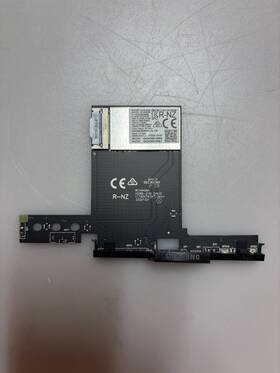
( Brand: Samsung ), ( Manufacturer Part Number: BN59-01373A ), ( Compatible Model: Wca942m ), ( Type: Wifi Bluetooth Module )
Review SAMSUNG Wi fi And Bluetooth Wireless Module
The **Samsung BN59-01373A (WCA942M) Wireless Module** is a high-performance, versatile Bluetooth and Wi-Fi connectivity solution designed to seamlessly integrate advanced wireless functionality into a wide range of electronic devices, from industrial automation systems and smart home appliances to commercial kiosks and IoT-enabled gadgets. Engineered with Samsung s reliability and cutting-edge technology, this module combines robust performance with ease of integration, making it an ideal choice for developers and manufacturers seeking a compact yet powerful wireless communication solution. Built around a dual-mode architecture, the WCA942M module supports both **Bluetooth 4.2 (BLE)** and **Wi-Fi 802.11 b/g/n**, enabling devices to connect wirelessly over short to medium ranges with minimal latency and maximum efficiency. Its **Wi-Fi capabilities** allow for high-speed data transfer and seamless network connectivity, ideal for applications requiring real-time communication, such as remote monitoring, firmware updates, or cloud-based interactions, while its **Bluetooth Low Energy (BLE)** functionality ensures energy-efficient, low-power connections perfect for battery-operated devices like wearables, sensors, or IoT endpoints. The module s **compact form factor** and **modular design** facilitate straightforward integration into existing hardware, reducing development time and complexity without compromising performance. With built-in **security protocols**, including **WPA2/WPA3 encryption for Wi-Fi** and **AES-128 encryption for Bluetooth**, the WCA942M ensures secure data transmission, protecting sensitive information in both consumer and enterprise applications. Additionally, its **low power consumption** critical for portable and always-on devices extends battery life while maintaining optimal connectivity, making it an excellent fit for applications where efficiency and sustainability are key priorities. Whether deployed in a **smart factory for machine-to-machine (M2M) communication**, a **healthcare device for patient monitoring**, or a **retail kiosk for interactive displays**, this module delivers the flexibility and reliability needed to meet modern connectivity demands. Samsung s robust support and extensive documentation further simplify deployment, ensuring that engineers can quickly prototype, test, and deploy wireless-enabled solutions with confidence. Ultimately, the **Samsung BN59-01373A (WCA942M)** stands as a cornerstone for next-generation wireless applications, bridging the gap between innovation and practicality with unmatched performance and adaptability.
The **Samsung BN59-01373A (WCA942M)** is a wireless communication module designed for Bluetooth and Wi-Fi connectivity, commonly used in industrial, IoT, and automation applications. Below is a detailed breakdown of its pros and cons, followed by a conclusion and recommendation.
---
### **Pros of the Samsung BN59-01373A (WCA942M)**
1. **Dual-Mode Connectivity**
The module supports both **Bluetooth (Classic and Low Energy)** and **Wi-Fi (802.11b/g/n)**, making it versatile for applications requiring multiple wireless protocols. This flexibility allows seamless integration with various devices, including sensors, actuators, and cloud platforms.
2. **Industrial-Grade Durability**
Designed for harsh environments, the module is built to withstand extreme temperatures (typically **-40 C to 85 C**), high humidity, and electromagnetic interference. This makes it suitable for outdoor, automotive, or factory automation applications where reliability is critical.
3. **Compact and Modular Design**
The small form factor (typically around **25.4 x 25.4 x 3.0 mm**) allows for easy integration into constrained spaces, such as embedded systems or compact industrial controllers. The modular design also simplifies replacement and upgrades.
4. **Low Power Consumption**
The module is optimized for energy efficiency, which is crucial for battery-powered IoT devices. Bluetooth Low Energy (BLE) mode, in particular, reduces power draw significantly compared to traditional Bluetooth, extending device lifespan in portable or remote applications.
5. **Secure Communication Protocols**
The module supports **WPA2/WPA3 encryption** for Wi-Fi and **AES encryption for Bluetooth**, enhancing data security in applications where unauthorized access is a concern. This is important for industrial control systems, healthcare devices, or financial transactions.
6. **Wide Voltage Range**
Most variants of this module operate within a broad voltage range (e.g., **3.0V to 5.5V**), making it compatible with a variety of power sources without requiring additional voltage regulation.
7. **Global Regulatory Compliance**
The module is certified for **FCC, CE, and other regional standards**, ensuring legal compliance for deployment in different markets. This reduces the risk of regulatory hurdles during product launch.
8. **Easy Integration with Development Tools**
Samsung provides **development kits, SDKs, and documentation** to simplify integration with microcontrollers (e.g., ARM Cortex-M, STM32) and operating systems (e.g., FreeRTOS, Linux). This accelerates prototyping and deployment.
9. **Long-Term Availability and Support**
As a well-established product line, the BN59 series has been in production for years, ensuring continued availability of components and technical support. This reduces the risk of obsolescence compared to newer, less-proven modules.
10. **Compatibility with Common Protocols**
The module supports standard protocols like **MQTT, CoAP, and HTTP/HTTPS** for IoT applications, enabling easy connectivity to cloud platforms (e.g., AWS IoT, Azure IoT, Google Cloud). This is ideal for remote monitoring and data analytics.
---
### **Cons of the Samsung BN59-01373A (WCA942M)**
1. **Limited Wi-Fi Bandwidth**
The module operates in the **2.4 GHz band only**, which can be congested in dense environments (e.g., smart homes, offices). While it supports **Wi-Fi 4 (802.11n)**, it lacks the higher speeds and lower latency of **Wi-Fi 5 (802.11ac) or Wi-Fi 6 (802.11ax)**. This may be a limitation for bandwidth-intensive applications.
2. **No Built-in Antenna Diversity**
The module typically uses a **single antenna**, which can lead to weaker signal reception in multipath environments (e.g., indoor spaces with reflections). Antenna diversity (multiple antennas) improves reliability but is not standard in this module.
3. **Firmware Limitations**
Some older versions of the BN59 series may have **limited firmware updates** or lack support for newer Bluetooth/Wi-Fi features (e.g., Bluetooth 5.2, Wi-Fi 6E). Users must verify compatibility with their specific use case and check for the latest firmware revisions.
4. **Higher Cost Compared to Basic Modules**
While the module is competitively priced for its industrial-grade features, it may be **more expensive than basic Bluetooth-only or Wi-Fi-only modules** (e.g., ESP8266, nRF52). For simple applications, a cheaper alternative might suffice.
5. **Development Complexity**
Integrating the module requires **programming expertise**, especially for custom protocols or security implementations. Beginners may find the development process challenging due to the need for low-level configuration (e.g., AT commands, register settings).
6. **Limited Onboard Memory**
The module typically has **minimal onboard memory** (e.g., a few KB of RAM and flash), which may require external memory or microcontrollers for large data storage or complex applications.
7. **Power Management Challenges**
While the module is power-efficient, **optimizing power consumption** (e.g., during sleep modes or deep sleep) may require additional hardware or software tweaks, especially in battery-powered devices.
8. **No Built-in GPS or Cellular Support**
The module does not include **GPS or cellular (LTE/4G/5G) connectivity**, limiting its use in applications requiring location tracking or wide-area network (WAN) connectivity. For such cases, a separate module (e.g., SIM7000, Quectel BG96) would be needed.
9. **Potential Latency in Wi-Fi**
For real-time applications (e.g., industrial automation, gaming), the **Wi-Fi latency** of the BN59 module may not be as low as dedicated high-performance Wi-Fi modules (e.g., Qualcomm Atheros, Intel AX chips).
10. **Vendor Lock-In Risks**
Relying on Samsung s proprietary firmware or development tools may create **vendor lock-in**, making it harder to switch to alternative modules or platforms in the future. Open-source alternatives (e.g., ESP32, Nordic nRF) offer more flexibility.
---
### **Conclusion**
The **Samsung BN59-01373A (WCA942M)** is a **reliable, dual-mode wireless module** well-suited for **industrial, IoT, and automation applications** where **durability, security, and flexibility** are prioritized. Its **Bluetooth Wi-Fi support, industrial-grade build, and low power consumption** make it a strong choice for projects requiring robust wireless connectivity in challenging environments.
However, its **limited Wi-Fi bandwidth, lack of advanced features (e.g., Wi-Fi 6, antenna diversity), and higher cost** compared to basic modules may make it **overkill for simple or consumer-grade applications**. Additionally, **development complexity and potential vendor lock-in** could be drawbacks for users seeking open or cost-effective solutions.
---
### **Recommendation**
**Buy the Samsung BN59-01373A if:**- You need a **dual-mode (Bluetooth Wi-Fi) module** for **industrial, automotive, or IoT applications** with **harsh environmental conditions**.
- **Security and reliability** are critical (e.g., encrypted communication, long-term stability).
- You require **global regulatory compliance** (FCC, CE) and **long-term availability**.
- Your project involves **low-power, battery-operated devices** (e.g., sensors, wearables) where Bluetooth Low Energy is beneficial.
- You are working with **Samsung s development ecosystem** and have access to necessary tools (e.g., SDKs, AT command guides).
**Avoid the Samsung BN59-01373A if:**- You need **high-speed Wi-Fi (Wi-Fi 5/6)** or **low-latency connectivity** (e.g., gaming, video streaming).
- Your budget is tight, and a **cheaper Bluetooth-only or Wi-Fi-only module** (e.g., ESP32, nRF52, CC3200) would suffice.
- You require **GPS, cellular, or advanced antenna features** (e.g., MIMO, beamforming).
- You prefer **open-source or vendor-neutral solutions** to avoid proprietary dependencies.
- Your application is **consumer-grade** (e.g., smart home devices) where simpler, lower-cost modules are adequate.
**Alternatives to Consider:**- For **high-performance Wi-Fi**: Qualcomm Atheros AR9331, Intel AX200.
- For **low-cost IoT**: ESP32 (Wi-Fi Bluetooth), Nordic nRF52840 (Bluetooth LE).
- For **cellular Wi-Fi**: Quectel BG96 (LTE-M), SIM7600 (4G).
- For **industrial Bluetooth-only**: Nordic nRF52832, Texas Instruments CC2640.
---
**Final Verdict:** The BN59-01373A is a **solid industrial-grade choice** for applications demanding **dual wireless connectivity in tough environments**, but it may not be the best fit for cost-sensitive or high-performance wireless needs. Always verify the **specific variant s datasheet** and **compatibility with your microcontroller/OS** before purchasing.
Details:
part #: bn5901373a prices
- $33.90-$109.27
specifications tvboardgo:
- brand: Samsung
- mpn: Bn59-01373a
- compatible model: Wca942m
- type: Wifi Bluetooth Module
offer tvboardgo:
- quantity: 1
- started: March 6, 2026
- options: Ship-to-home
- sold: 0
- availability: In Stock
shipping tvboardgo:
- type: Calculated
- service: USPS Ground Advantage
- cost: $5.20
- class: Standard
- transit: 4-10 Days
- carrier: USPS
seller tvboardgo:
- # reviews: 290
- rating: 99.1%
- city: Charlotte, North Carolina
general tvboardgo:
- TV, Video Home Audio > TV, Video Audio Parts > TV Boards, Parts Components
- condition: Used
payments tvboardgo:
- wallet: Google-pay
- other
- credit card: Visa
returns tvboardgo:
- method: Money back
- policy: Returns Accepted
- time: 30 Days
- paid by: Buyer
Samsung BN59-01373A Is Similar To:
- 2012svs60 Samsung Un60es6100f Right And (33.3% similar) Please see the photos, board was in fully working condition before removed from TV. Pictures of the broken TV unit and label are for information purposes only. 3 SVS60 7032NNB 3d RIGHT88 rev this sale is for the boards only. This is a set of right and left led strip for Samsung UN60ES6100FPART ...(June 6th, 2017)
- 4943333161283 Samsung Led Backlight Strips And (29.4% similar) All electronic items are marked with a small pink, round anti-tamper sticker. If it just did not resolve your problem, is always a bad part. Please be honest with the issue. Once at the order details page, return item system will prompt you with a few questions and then give label packing slip. Our ...(March 23rd, 2018)
- 680044149554 Samsung Bluetooth Module Wi-fi (45.3% similar) Do not order by board number or model unless instructed to in the important message row. The part number row gives you actual. A used part does not mean it will work great for you years to come. The important message row tells you where and how to find part number. Damage usually occurs during ...(October 28th, 2017)
- Bn44-00553a And Bn44-00655a Samsung Power (19.2% similar) Reason of incompatibility is not accepted as for return. Feel free to for any questions prior buying...(March 19th, 2017)
- Bn44-00856c Samsung Power Supply Led Board With Cables And Button (34.4% similar) Part number: BN44-00856CIMPORTANT info: number can be found within the serial on white bar code sticker board. 6-MONTH warranty...(February 17th, 2019)
- Bn44-00932b L55e6 Nsm Pslf171301a Bn4400932b Samsung Power Board For Model And Others (27% similar) Samsung power board BN4400932B for model UN55NU6900BXZA and others the is absolutely good, it was removed from a working set which had damaged screen. This board is compatible with the following Samsung model's...(January 16th, 2019)
- Bn59-01130b Samsung Wireless Lan Module Network Wifi Card (46.7% similar) ...(April 19th, 2018)
- Bn59-01148a Samsung Module (31.5% similar) Fully functional wi fi module taken from a working set with cosmetically damaged display part is tested and works excellent guaranteed...(November 10th, 2018)
- Bn59-01161a Samsung Module (31.5% similar) BN59-01174A. Samsung wifi module. Pulled from a working TV...(August 18th, 2018)
- Bn59-01174a Samsung Un60j6200afxza Wi-fi Module (43.6% similar) Came from a broken screen TV Samsung UN60J6200AFXZA 6 month old model WIDT30Q...(January 30th, 2018)
- Bn59-01174d Samsung Un65ku6290f Wifi Module (43.4% similar) Pulled from a brand new TV with damaged screen due to shipping...(October 16th, 2017)