HARRIS Board Module VERAT1LITY DVS11 SD-107664-M2 021-109146
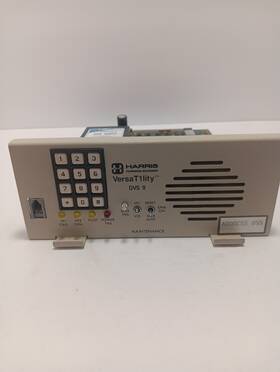
( Brand: Harris ), ( Manufacturer Part Number: 109146 ), ( Type: Module )
Review HARRIS Maintenance Board Module
The **Harris Veratility DVS11 Board Module (Part Number: 109146, SD-107664-M2, Model Code: 021-109146)** is a high-performance, modular signal processing and radio frequency (RF) platform designed to deliver advanced communication, radar, and electronic warfare capabilities in demanding military, aerospace, and defense applications. Engineered by Harris Corporation, a leader in mission-critical technologies, this versatile board module integrates cutting-edge digital signal processing (DSP) and RF engineering to provide a compact yet powerful solution for next-generation systems. The DVS11 leverages a robust, high-speed architecture to handle complex signal processing tasks, including waveform generation, modulation, demodulation, and real-time data acquisition, making it ideal for applications such as electronic countermeasures (ECM), secure communications, radar signal intelligence (SIGINT), and advanced sensor fusion. Its modular design allows for seamless integration into larger systems, offering flexibility in configuration and scalability to meet evolving mission requirements.
At the heart of the Veratility DVS11 lies a high-performance processing core, featuring a combination of FPGAs (Field-Programmable Gate Arrays) and embedded processors that enable parallel processing and real-time signal manipulation. The module supports a wide range of digital interfaces, including PCIe (Peripheral Component Interconnect Express), Gigabit Ethernet, and high-speed serial links like LVDS (Low Voltage Differential Signaling) and SerDes (Serializer/Deserializer), ensuring compatibility with modern data acquisition and transmission systems. The RF section of the DVS11 is optimized for high-frequency operations, with support for broadband signal handling and adaptive tuning capabilities, allowing it to operate across multiple frequency bands with minimal latency. This versatility makes it suitable for applications requiring dynamic spectrum access, multi-mode communications, or advanced radar signal processing.
One of the standout features of the Veratility DVS11 is its ruggedized and compact form factor, designed to withstand the harsh environmental conditions encountered in military and aerospace deployments. The module is built to meet stringent MIL-SPEC standards, ensuring reliability in extreme temperatures, vibration, and electromagnetic interference (EMI) environments. Its low-power design further enhances operational efficiency, reducing thermal management requirements while maintaining peak performance. Additionally, the DVS11 supports software-defined radio (SDR) architectures, enabling developers to reprogram and reconfigure the module s functionality through software updates, thereby extending its operational lifespan and adaptability to future technological advancements. This software-centric approach simplifies integration into existing systems and reduces the need for hardware modifications, offering a cost-effective and future-proof solution.
The Veratility DVS11 is particularly well-suited for applications in electronic warfare, where its ability to process and analyze complex RF signals in real time is critical. Whether deployed in airborne, ground-based, or naval platforms, this module can be configured to perform tasks such as signal interception, jamming, deception, or secure communications, providing operators with a tactical edge in contested environments. Its high-speed processing capabilities also make it an excellent choice for radar systems, where it can enhance target detection, tracking, and classification by processing large volumes of data with minimal delay. For defense contractors and system integrators, the DVS11 offers a balance of performance, flexibility, and reliability, making it a cornerstone component in the development of next-generation military and aerospace systems. With its advanced signal processing, robust build quality, and adaptable architecture, the Harris Veratility DVS11 stands as a testament to innovation in the field of RF and digital communication technologies.
### **Pros and Cons of buying a Harris Veratility DVS11 Board Module (SD-107664-M2, 021-109146)**
#### **Pros**
1. **High Performance and Reliability**
The Harris Veratility DVS11 is designed for rugged, high-performance applications, particularly in defense, aerospace, and industrial environments. It is built with military-grade components, ensuring durability and long-term reliability in harsh conditions.
2. **Modular and Scalable Architecture**
The board is part of Harris Veratility platform, which allows for modular upgrades and scalability. This means you can expand functionality by adding compatible modules, reducing the need for complete system replacements as requirements evolve.
3. **Advanced Processing Capabilities**
The DVS11 features high-speed processing, supporting real-time data processing, signal intelligence (SIGINT), and electronic warfare (EW) applications. It is capable of handling complex algorithms and high-bandwidth data streams efficiently.
4. **Compatibility with Military and Industrial Standards**
The board adheres to strict military and industrial standards, including MIL-STD-810G for environmental resistance, MIL-STD-461 for electromagnetic compatibility (EMC), and MIL-STD-1553 for data bus communication. This makes it suitable for defense contracts and mission-critical applications.
5. **Low Latency and High Throughput**
Designed for real-time systems, the DVS11 provides low-latency processing and high data throughput, which is essential for applications like radar processing, communications security, and autonomous systems.
6. **Support for Multiple Interfaces**
The board supports a variety of interfaces, including Ethernet, MIL-STD-1553, ARINC-429, and serial communication protocols. This versatility ensures seamless integration with existing systems and reduces compatibility issues.
7. **Long-Term Availability and Support**
Harris is a well-established manufacturer with a strong track record in defense and aerospace electronics. The DVS11 is likely to have extended support and availability, which is crucial for long-term mission assurance.
8. **Security Features**
The board includes hardware-based security features, such as secure boot and encryption support, which are critical for protecting sensitive data in defense and government applications.
---
#### **Cons**
1. **High Cost**
As a military-grade and high-performance board, the Harris Veratility DVS11 is expensive. The cost may be prohibitive for small businesses, startups, or non-defense applications where budget constraints are a concern.
2. **Complexity in Development and Integration**
The advanced features and modular nature of the DVS11 require specialized knowledge for development and integration. Engineers may need extensive training or support from Harris to fully utilize the board s capabilities, adding to the overall project timeline and cost.
3. **Limited Commercial Availability**
While the board is robust, its primary market is defense and aerospace. Commercial availability may be limited compared to consumer-grade or off-the-shelf (COTS) solutions, which could affect procurement lead times.
4. **Power Consumption**
High-performance processing and multiple interfaces can result in higher power consumption. This may require additional power management solutions or larger power supplies, adding complexity to the system design.
5. **Dependence on Harris Support**
Since the DVS11 is a proprietary solution, users may become dependent on Harris for technical support, firmware updates, and future compatibility. This can create potential risks if Harris discontinues support or if there are delays in addressing issues.
6. **Overkill for Non-Military Applications**
For applications that do not require military-grade durability or real-time processing at this level (e.g., consumer electronics, basic industrial control systems), the DVS11 may be unnecessarily expensive and complex. A simpler, lower-cost COTS solution might suffice.
7. **Potential for Obsolescence**
While Harris is a reputable manufacturer, the rapid evolution of technology could eventually render the DVS11 outdated. Users should consider whether the board s lifecycle aligns with their long-term project requirements.
---
### **Conclusion**
The Harris Veratility DVS11 board module is an excellent choice for defense, aerospace, and high-reliability industrial applications where performance, scalability, and military-grade durability are critical. Its advanced processing capabilities, modular design, and adherence to strict standards make it a robust solution for mission-critical systems. However, the high cost, complexity, and specialized requirements may not justify its use for non-defense or budget-sensitive projects.
If your application demands real-time processing, ruggedness, and long-term reliability particularly in defense or aerospace then the DVS11 is a strong recommendation. For other applications, evaluating whether the benefits outweigh the costs and complexity is essential.
### **Recommendation**
- **Buy the Harris Veratility DVS11 if:**- You are working on a defense, aerospace, or high-reliability industrial project.
- Your application requires real-time processing, MIL-STD compliance, and scalability.
- Budget constraints are not a limiting factor, and long-term support is a priority.
- **Avoid or Consider Alternatives if:**- Your project is commercial or consumer-focused with budget limitations.
- You lack the expertise or resources to integrate and maintain a high-end military-grade board.
- A simpler, lower-cost COTS solution can meet your performance requirements.
For non-defense applications, explore alternatives like COTS FPGA boards (e.g., Xilinx or Intel FPGAs) or high-performance embedded systems that offer a balance between cost and capability. Always conduct a thorough cost-benefit analysis before committing to the DVS11.
Details:
Surplus Harris versaT1lity DVS 2.
part #: 109146 prices
- $89.87-$140.00
specifications tvboardgo:
- brand: Harris
- mpn: 109146
- type: Module
payments tvboardgo:
- other
- wallet: Apple-pay
- credit card: Discover
seller tvboardgo:
- city: Lithia, Florida
- # reviews: 2425
- rating: 100.0%
shipping tvboardgo:
- class: Standard
- carrier: USPS
- service: USPS Ground Advantage
- cost: $0.00
- transit: 4-8 Days
- type: Calculated
returns tvboardgo:
- policy: No Returns
offer tvboardgo:
- sold: 0
- quantity: 1
- availability: In Stock
- options: Ship-to-home
- started: June 4, 2026
general tvboardgo:
- TV, Video Home Audio > TV, Video Audio Parts > TV Boards, Parts Components
- condition: Used